+86 13438161196


Buying Water Glass in bulk looks simple until product quality, freight, and breakage affect the final cost. A low unit price can hide weak rims, inconsistent capacity, or poor carton protection. Buyers need evidence, not attractive photographs.
Industry data supports careful sourcing. The Glass Packaging Institute states that glass is widely valued for being inert, reusable, and recyclable. FEVE market reports also show the continued importance of glass packaging across food and beverage supply chains. However, those advantages depend on responsible production and reliable recovery systems. A supplier’s environmental claim should include measurable details, such as recycled content, furnace energy use, and packaging materials.
Quality control deserves equal attention. Request samples from the same production batch whenever possible. Check the rim with your fingertips. Examine the base for wobbling. Fill each glass with water and compare capacity, weight, and clarity. For repeated-use products, ask for test information covering thermal shock, dishwasher durability, and food-contact safety. Standards such as EN 1183 may help assess thermal shock performance, while recognized food-contact requirements should match the destination market.
The numbers matter.
Freight can exceed the product cost when cartons waste space. Ask for carton dimensions, pallet loading plans, insurance terms, and documented breakage rates. Confirm whether replacements are included for damaged units. A professional supplier should explain mold fees, lead times, inspection procedures, and acceptable defect limits.
Bulk buying is not always cheaper. That assumption deserves scrutiny. Ten thousand glasses may create storage pressure, cash-flow risk, and unnecessary waste. The following ten tips connect product design, supplier verification, logistics, pricing, and sustainability. They aim to make Water Glass purchasing more practical, measurable, and easier to defend internally.
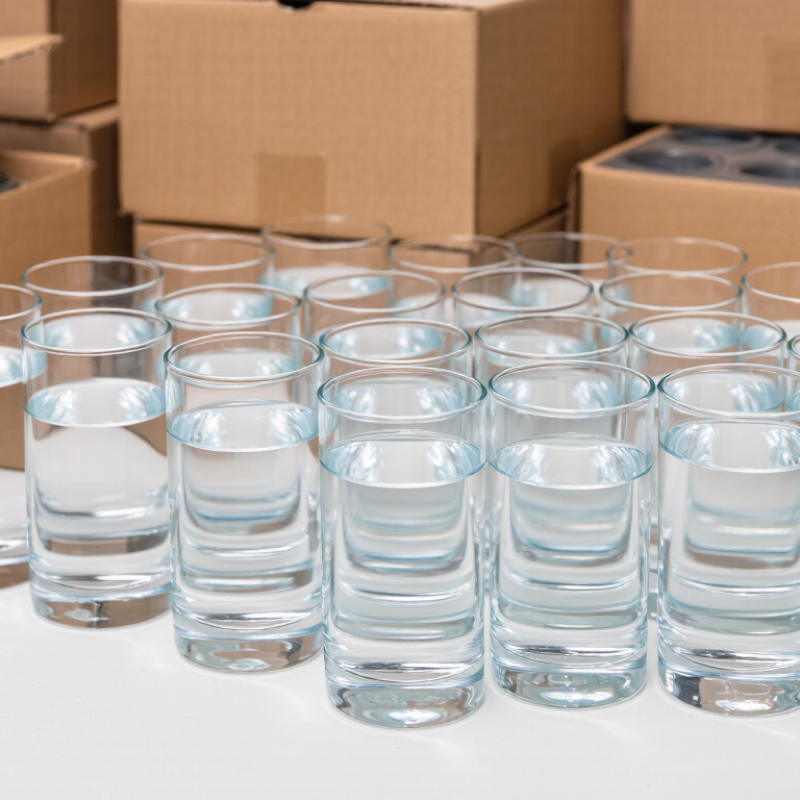
Before buying water glasses in bulk, define their exact purpose. Are they for daily dining, hospitality service, events, or retail resale? Usage determines the suitable shape, capacity, rim thickness, and durability. A 300-milliliter glass may suit tables, while larger glasses work better for self-service stations. Measure your storage shelves and serving trays too. Small details matter.
Tip: Build a written requirement sheet.
Include the required quantity, glass type, dimensions, weight, color, packaging, and delivery schedule. Decide whether identical replacements will be needed later. Ask for product samples before approving a large order. Test them with cold water, warm washing cycles, and repeated handling. Check the rim carefully. It should feel smooth, not sharp or uneven. I have seen attractive samples fail after routine use because their bases were too unstable.
Tip: Test real conditions, not just appearance.
Set an acceptable defect rate before negotiating. Clarify how damaged pieces will be counted and reported. Inspect several cartons, rather than checking one box only. A reasonable buffer is also useful, especially for busy venues. However, ordering too much can create dead stock and tie up cash. My earlier estimates have sometimes been too optimistic. Actual breakage, seasonal demand, and storage limits deserve honest review. Ask whether the supplier can maintain the same specifications for future orders. Clear requirements reduce confusion, but they cannot replace practical testing.
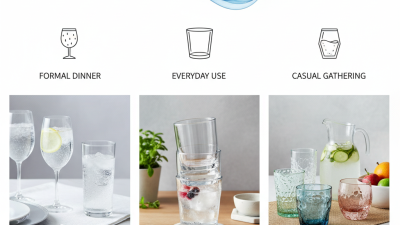
Buying water glasses in bulk starts with matching glass type to the setting, not choosing the lowest price. Soda-lime glass suits everyday dining and offers practical durability. Tempered glass handles sudden temperature changes better, making it useful for busy cafés or outdoor service. Borosilicate glass tolerates heat well, but it may cost more and still requires careful handling. I have seen buyers overlook this difference. That mistake becomes expensive after repeated replacements.
Size should follow the drink and the user’s routine. A 250-milliliter glass works well for children, hotel rooms, and controlled portions. Medium glasses between 300 and 400 milliliters fit most dining tables. Larger 500-milliliter models suit water stations, gyms, and casual restaurants. Check the rim diameter, base width, and shelf height before ordering. A tall glass may look elegant, yet it can fail under a low cabinet.
Intended use also affects shape and thickness. Thick bases improve stability, especially on crowded tables. Lightweight glasses reduce carrying fatigue for staff. For frequent dishwashing, choose smooth surfaces without deep decorative grooves. Those details trap residue. Request samples before placing a large order, and test them through several washing cycles. Specifications can look reliable on paper. Real handling sometimes tells a different story. Keep a small allowance for breakage, but do not assume every damaged glass results from poor quality. Storage, transport, and rushed service matter too.
10 Tips for Buying Water Glass in Bulk
When buying water glasses in bulk, assess the supplier before comparing prices. Ask for business registration, factory location, production capacity, and recent quality records. A dependable supplier should explain glass composition, manufacturing controls, and inspection methods clearly. Request samples from the same production line planned for your order. Samples can look excellent. The full shipment may differ.
Check product safety with specific documents. Ask for food-contact declarations and migration test reports from an independent laboratory. Confirm testing covers lead, cadmium, and other restricted substances relevant to your market. Review the report date, tested product code, and laboratory credentials. Do not accept a certificate with unclear scope. It may not apply to your glasses. Also inspect rim smoothness, cracks, bubbles, uneven thickness, and unstable bases. These details affect daily handling and breakage risk.
Quality standards should include dimensional tolerances, impact checks, thermal shock testing, and cleanliness controls. Ask how workers separate damaged pieces and how inspection results are recorded by batch. Packaging deserves equal attention. Dividers, inner cartons, and drop testing can prevent hidden damage during transport. A small pilot order is safer than committing immediately. I once underestimated carton strength; the glass passed inspection but arrived with chipped rims. That mistake changed my purchasing checklist. Still, no checklist is perfect. Keep written specifications, approve a sealed reference sample, and define replacement terms before production begins.
Calculate Costs, Shipping, Storage, and Minimum Orders
Tip 1: Calculate the full unit cost, not only the quoted price. Add packaging, freight, handling, and possible breakage.
Tip 2: Compare price per usable glass. A low price means little if ten percent arrives damaged.
Tip 3: Ask about the minimum order quantity before requesting samples. A large minimum can trap cash for months.
Tip 4: Divide the required quantity by carton size. Rounded orders often create unexpected overstock.
Tip 5: Request shipping estimates for both standard and faster services. Freight can exceed the product cost during busy seasons.
Tip 6: Check carton dimensions and total weight. These figures affect warehouse fees and delivery charges.
Tip 7: Confirm whether duties, insurance, and unloading costs are included. Written details are safer than verbal promises.
Tip 8: Calculate storage space using actual cartons. Leave room for aisles, inspection, and safe lifting. A crowded corner becomes expensive quickly.
Tip 9: Inspect one opened carton from every delivery batch. Check rim quality, clarity, dimensions, and protective packing.
Tip 10: Negotiate staged shipments when storage is limited. This may cost slightly more, but it protects working capital.
In my experience, buyers often overestimate demand. I have made that mistake too. Review sales records, seasonal events, and replacement rates before ordering. Keep a small reserve, but question every extra carton.
A sample is not a formality before buying water glasses in bulk. It is the closest preview of your real shipment. Request several pieces from the same production batch, not one polished showroom sample. Check the rim with a fingertip. It should feel even, without sharp edges, waves, or tiny chips. Measure height, diameter, and capacity with simple tools. A two-millimeter difference can affect shelves, trays, and drink portions.
Test the glasses under natural light. Look for bubbles, cloudy areas, stress lines, and uneven bases. Fill each glass with water, place it on a flat table, and gently rotate it. Wobbling deserves investigation. Repeat washing and handling tests when possible. One overlooked weakness can multiply across thousands of units. The U.S. EPA’s 2018 Facts and Figures report recorded 12.3 million tons of glass containers in municipal waste, with a 31.3% recycling rate. This supports careful material selection, but recyclability does not prove durability. I would not treat a supplier’s AQL claim as a quality guarantee; sampling reduces risk, rather than removing it.
Before confirming the final bulk purchase, approve a signed reference sample. Record dimensions, weight, capacity, color, logo-free finish, carton count, and acceptable defects. Ask for a pre-shipment inspection report with photographs and measured results. Compare the report against the approved sample, not only the purchase order. Include packaging details, because a perfect glass can still arrive damaged. A practical mistake is approving appearance while ignoring stacking strength. Test both. Then confirm production only after every change is documented.
A practical quality-control and purchasing checklist for bulk glassware procurement
| No. | Buying Tip | Key Dimension to Check | Recommended Acceptance Criteria | Sample Inspection Method | Final Bulk-Purchase Confirmation |
|---|---|---|---|---|---|
| 1 | Define the exact glass type | Material, capacity, shape, and intended use | Specify soda-lime or borosilicate glass, nominal capacity, dimensions, rim style, and whether the glass is intended for cold or hot beverages. | Compare the physical sample with the written specification and measure height, diameter, and capacity. | Add the approved specification, drawing, and tolerance range to the purchase order. |
| 2 | Inspect samples under strong light | Cracks, chips, bubbles, stones, scratches, and visible inclusions | No cracks or sharp chips; reject any defect that affects safety, sealing, appearance, or structural integrity. | Rotate each sample against a bright, neutral background and inspect the rim, base, sidewall, and inner surface. | Attach approved defect-limit photographs or written examples to the quality agreement. |
| 3 | Measure capacity and dimensions | Nominal volume, height, rim diameter, base diameter, and wall thickness | Use agreed tolerances, such as capacity within ±5% and dimensional tolerances of approximately ±1–2 mm unless a tighter specification is required. | Use a calibrated scale, water, ruler, and caliper; record results for several samples rather than one item. | Confirm the approved drawing, measurement method, and sampling quantity before production. |
| 4 | Check rim and base safety | Rim smoothness, base stability, and sharp-edge risk | The rim should feel smooth and continuous, while the glass should stand level without rocking on a flat surface. | Run a clean fingertip or soft cloth around the rim and place each sample on a level table to check stability. | State that sharp rims, unstable bases, and exposed edge defects are unacceptable defects. |
| 5 | Evaluate thermal performance | Resistance to expected temperature changes | Verify whether the glass is suitable for room-temperature, chilled, warm, or hot beverages; do not assume ordinary glass is heat-resistant. | Use the supplier’s documented thermal limits and conduct controlled temperature testing only with suitable safety procedures. | Record the approved temperature range and prohibit use outside that range in the product documentation. |
| 6 | Review appearance consistency | Color, clarity, transparency, shape, and decorative finish | Samples should match in color and finish, with no noticeable distortion, haze, uneven decoration, or inconsistent forming marks. | Compare samples side by side under the same lighting and viewing distance. | Approve a physical reference sample and specify acceptable color and finish variation. |
| 7 | Confirm food-contact suitability | Material safety, coatings, inks, and decorations | Any coating, print, or decoration should be suitable for the intended food-contact use and cleaning conditions. | Review compliance documents and check whether printed areas remain intact after the stated washing conditions. | List required food-contact documentation and testing records in the order file. |
| 8 | Check cleaning and dishwasher needs | Washability, stain retention, stacking, and drying | The shape should allow effective washing and drying; stacking features must not create excessive contact stress. | Wash representative samples using the intended cleaning process and inspect for haze, scratches, or decoration loss. | Confirm cleaning instructions, stacking limits, and any dishwasher-use statement in writing. |
| 9 | Verify packaging and transport protection | Individual protection, carton strength, dividers, and pallet arrangement | Each glass should be protected from rim-to-rim and side-to-side impact, with packaging suitable for stacking and long-distance transport. | Inspect a packed sample carton, perform a controlled handling check, and verify that units do not move excessively inside the carton. | Specify pack quantity, carton dimensions, gross weight, labeling, and damage-reporting procedures. |
| 10 | Inspect the final bulk order before shipment | Quantity, quality level, batch consistency, and shipping release | The shipment must match the approved sample, specification, packaging plan, and agreed defect limits before release. | Use a documented random-sampling inspection based on the order size and agreed acceptance criteria; record defects and measurements. | Require a signed inspection report, approved pre-shipment photographs, packing list, and written release authorization. |