
 +86 13438161196





0102030405
Ancient Chinese 'Glass': A Century of Archaeology Rewrite Cognition, Originally the Zhou Dynasty Was Able to Produce Glass
2025-06-23
When it comes to glass, it is believed that many Chinese people are full of regret, because ancient Egypt, West Asia and Europe could have made glass for a long time, while China seems to have made it in the Ming and Qing dynasties. Due to the wide range of uses of glass, some time travel novelists always design tricks to make money by making glass in ancient times.
However, little known is that archaeology over the past century has shown that ancient China was not only capable of making glass, but also as early as the Zhou Dynasty. Among them, there are even Transparent Glass products found in the tombs of the Cao Cao clan and the Famen Temple in Shaanxi during the Tang Dynasty. Next, let's talk about ancient Chinese glass through three archaeological cases. Ancient glass includes glass, but it does not only refer to glass.
Firstly, the Zhou Dynasty was already capable of producing glass
The emergence of glass is not mysterious, but rather a byproduct of the pottery and metallurgical processes, which is refined and processed into related glass products. Among them, metallurgy is a by-product of pottery making.
Due to the fact that glass is an amorphous material with an unstable structure, it is different from crystalline materials such as natural gemstones and jade. Therefore, the furnace temperature requirements are uncertain, but it has plasticity within a certain temperature range. Some netizens believe that the West can produce glass, and therefore infer that the furnace temperature can definitely smelt pig iron, which is incorrect.
As early as the Xia Dynasty, the furnace temperature in China had already reached 1200 degrees Celsius, and primitive porcelain could be fired. At the same time, the pottery industry in ancient China was well-developed, and the bronze industry in the Shang Dynasty was also well-developed. Therefore, it is not uncommon for ancient Chinese people to be able to create glass, although the earliest glass products discovered today were during the Zhou Dynasty. In the above picture, China has advanced ceramic metallurgy technology, which is related to advanced furnace design and can achieve high and uniform heating furnace temperature.
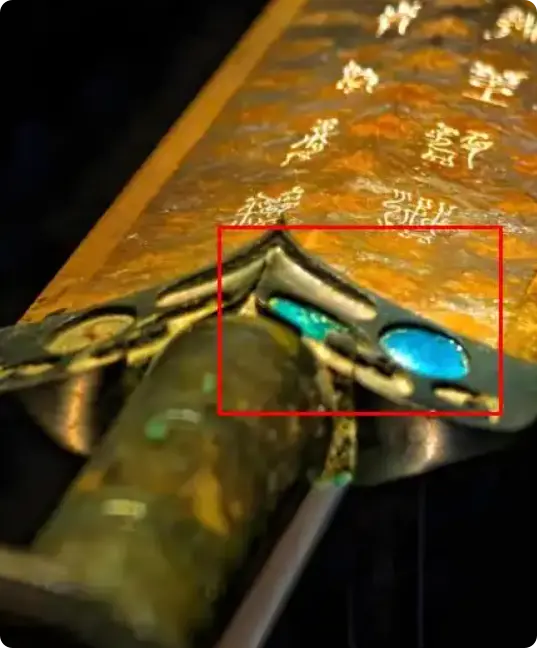
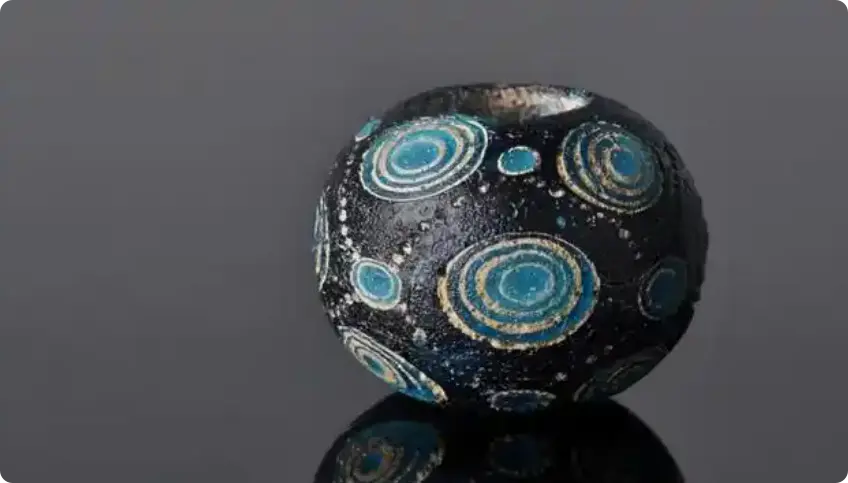
More than 100 dragonfly eye glass beads belonging to sodium calcium silicate glass were unearthed from the tomb of Zeng Houyi in Suizhou, Hubei. Therefore, many scholars believe that Zeng Houyi's dragonfly eye originated from West Asia. But before the glass beads of Zeng Houyi, China already had glass, for example, glass was embedded on the sword frame of King Goujian of Yue, which belongs to the unique potassium calcium silicate glass of ancient China.
After the Warring States period, China invented a unique type of glass called lead barium silicate glass, commonly known as "lead barium glass", which is internationally recognized as the most unique glass system in ancient China. In over 110 Chu tombs in Changsha, Hunan, more than 130 pieces of glazed jade, including cong, ring, bead, and tube, have been unearthed. Among them, the glazed jade is semi transparent and is made of lead barium glass.
Therefore, glass is not a Western invention, and Changsha is also one of the earliest regions to invent glass. The lead barium glass it invented is very different from the sodium calcium glass in the West. Among them, the reason why China is not a sodium calcium glass is related to the scarcity of natural sodium carbonate (natural soda ash) raw materials for related fluxing agents, and has little to do with technology.
From 1974 to 1977, at the Cao Clan Cemetery in Bozhou, Anhui Province, around 170 AD, five of the world's earliest artificial glass flat convex lenses were unearthed. Some of the edges had copper rust, indicating that these lenses were probably embedded in copper frames.
Regarding these five optical lenses, relevant research shows that: firstly, they have high transparency, with only tiny bubbles inside, and excellent magnification and focusing effects, indicating that ancient people had mastered advanced manufacturing techniques and certain optical knowledge; Secondly, the research article by Li Can and Ma Yanru points out that the chemical composition is different from that of Western soda lime glass, and the firing technology is derived from primitive ceramic technology, concluding that it is made in China.
At the same time, after the Eastern Han Dynasty, the composition of Chinese glass changed again. Lead barium silicate glass was no longer popular, but another type of glass unique to China emerged, namely high lead silicate glass, which gradually became the mainstream of homemade Glass In China.
Thirdly, the glass cup of Famen Temple in the Tang Dynasty
The transparency and glossiness of high lead silicate glass have been significantly improved, and it can also be blown. Therefore, after a period of technological accumulation, it became popular during the Tang and Song dynasties, and Famen Temple glass cups are one of them.
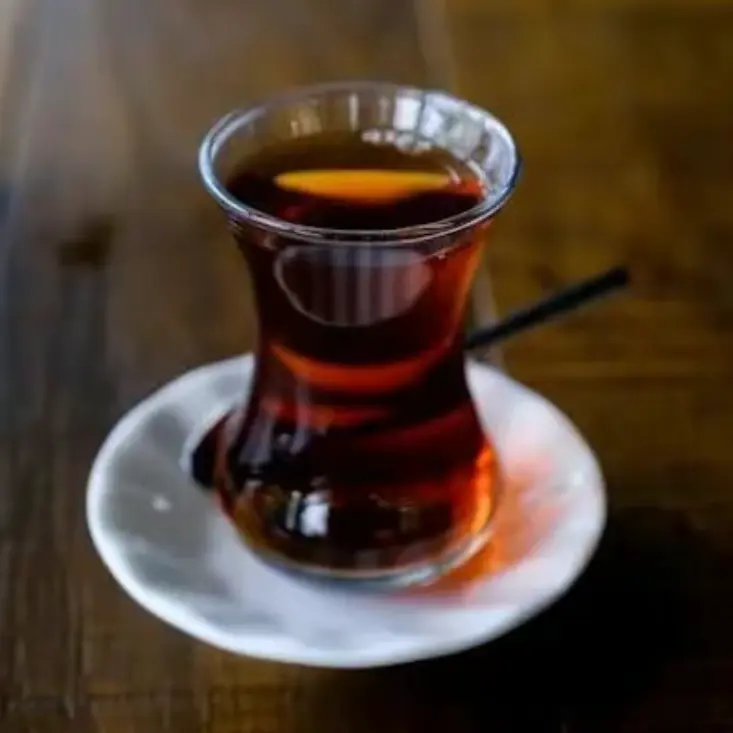
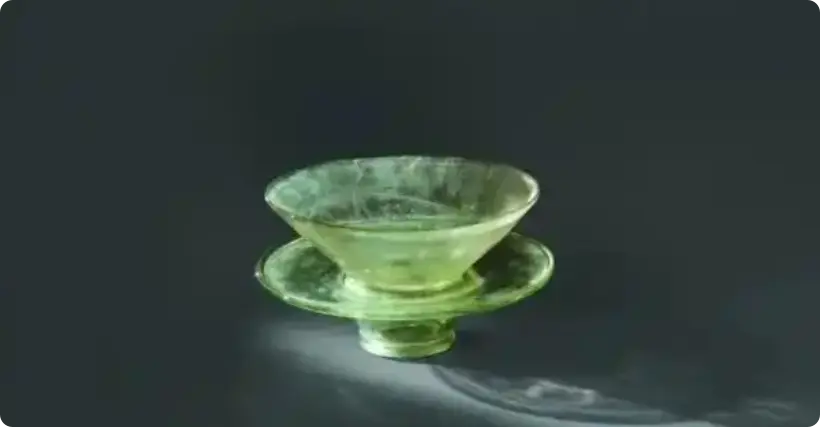
In 1987, at Famen Temple located in Fufeng, Baoji, Shaanxi, a glass tea cup and tea tray were unearthed from the back room of its underground palace. The tea cup was transparent with a slight green color, and there were some small bubbles distributed on the walls. Both the inner and outer walls appeared smooth and new.
In the underground palace of Famen Temple, a total of 20 glass products were unearthed, of which 18 have a West Asian style, but the tea cups and trays are completely unique to China and belong to Chinese made glass products.
The article "You may not know that there was also glass in ancient China" cited by Global Network Finance and Science Popularization China points out that this is a blown high lead silicate glassware, but high lead silicate glass is highly corrosive to melting crucibles. Later, potassium oxide was used to replace some lead oxide to make potassium lead silicate glass, and "this type of glass was more popular from the mid to late Tang Dynasty to the Song Dynasty
Among them, the Song Dynasty had a relatively rich collection of glassware, such as glass geese, glass grape skewers, tripod shaped utensils, egg shaped utensils, glass hairpins, and glass hairpins.
Overall, before the Yuan Dynasty, China was not only able to manufacture various types of glass products, but also developed several unique types of glass, which were not inferior to the West as a whole. The Book of Wei even recorded that domestic glass products at that time had a "luster that was more beautiful than those from the West". If we look at it from the perspective of technology and innovative use, China is clearly surpassing the West. After the Yuan Dynasty, China's glass manufacturing industry continued to develop, but it was not until after the Industrial Revolution that it truly fell behind the West.
Finally, it is not surprising that glass can be made in ancient China. After all, many people have heard of "colored glass". Glass is a kind of colored glass. Therefore, even if there is no archaeology, the manufacturing process of colored glass is recorded in ancient books, we can know that glass can be made in ancient China. But what is strange is why many people remember that glass could not be made in ancient China, and only after the arrival of Western missionaries could China? This question is extremely frightening to contemplate.